


Export to the United States customs clearance process
Dec 22, 2023
Leave a message
Export goods to the United States using a variety of trade methods. Some goods imported into the United States require customs clearance fees and taxes paid by the consignor. In this case, the United States customs broker will require Chinese exporters to sign a POA power of attorney before shipment, similar to China's customs clearance power of attorney. There are usually two ways to get customs clearance:
1. in the name of the U.S. consignee customs clearance
That is, the U.S. consignee (consignee) must provide POA to the U.S. agent of the freight forwarder but also need the U.S. consignee's bond.
2. Customs clearance in the name of the consignor
That is, the consignor to provide POA to the port of origin of the freight forwarder, and then transferred to the destination port agent, the U.S. agent, to help the consignor in the U.S. with the importer's customs registration number, while the consignor to buy Bond.
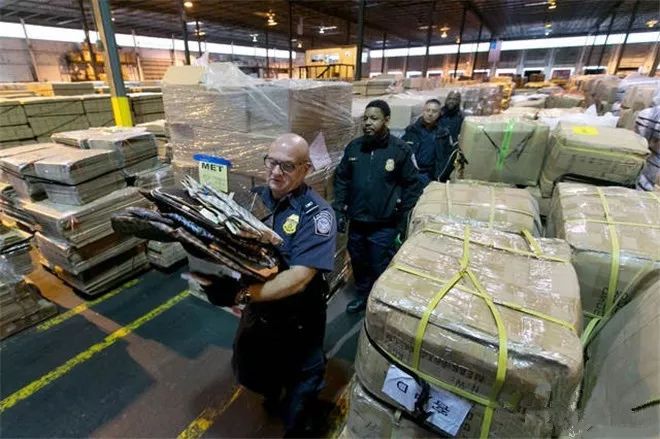
Attention:
1, the above two ways of customs clearance, no matter which one is used, must use the U.S. consignee's tax number (Tax ID, also called IRS No.) to clear customs.IRS No. (The Internal Revenue Service No.) is the U.S. consignee in the U.S. Internal Revenue Service registered in the U.S. a tax identification number.
2, in the United States, no Bond can not clear customs, no tax ID number can not clear customs.
Customs clearance process under this type of trade
1, Customs Clearance
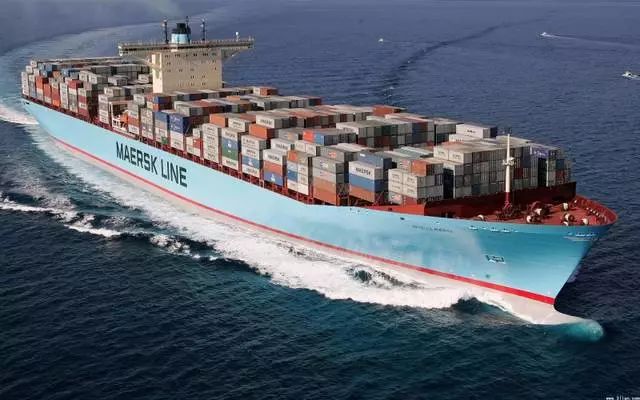
After the customs broker receives the notification of arrival, if the documents required by the customs are prepared at the same time, it can apply to the customs for customs clearance within 5 days of the preparation of the arrival at the port or the arrival at the inland point. Customs clearance for sea transportation will usually be informed within 48 hours of the release, and air transportation will be informed within 24 hours. In some cases, customs will decide to inspect the cargo before the ship even arrives in port. The vast majority of inland points allow for a pre-clearance to be made prior to the arrival of the shipment, but the results will only be shown after the shipment has arrived (i.e., after ARRIVAL IT).
There are two ways of declaring to Customs, either electronically or where Customs needs to review paperwork. Either way, we must prepare the required documents and other data and information.
2,Preparation of customs declaration documents
(1) Bill of Lading (B/L);
(2) Invoice (Commercial Invoice);
(3) Packing List;
(4) Arrival Notice (Arrival Notice)
(5) If there is wood packaging, a fumigation certificate (fumigation certificate) or no wood packaging statement (non-wood packing statement),.
The name of the consignee on the bill of lading (consignee) needs to be unified with the consignee shown on the last three documents; if not, the consignee on the bill of lading must be written on the transfer of goods (Letter of Transfer), and the third party can be cleared. The name, address, and telephone number of S and C are also needed on the invoice and packing list. Some domestic documents lack this information and will be asked to add it.
3,Transfer Customs
If inland customs clearance is required, we need to provide the I.T., I.T.#, effective date, place of departure, and place of discontinuance. #, effective date, place of departure, and place of suspension. Inland Customs will use I.T.# to control and release the goods.
4, Release goods
(1) In the former ABI system, shipping companies and terminals were directly networked with the Customs, which means that if the Customs releases goods in ABI, both shipping companies and terminals can see them.
After the trial implementation of AMS, large-scale shipping companies such as Evergreen, APL, Maersk, COSCO, CSCL, etc. are also networked AMS, but not the terminal, so the Customs release in AMS, these shipping companies as well as the NVOCC AMS FILER can be synchronized to see the shipping company to help the terminal system at the same time to update. Relatively small shipping companies, such as Sinotrans, LYKES, GWS, etc., do not have network AMS, so they can only be released through NVOCC AMS FILER by faxing the NVOCC Letter of Guarantee and a copy of Customs Pass (CUSTOMS FORM 3461), and then manually updating the terminal system after receiving the fax from these shipping companies.
(2) Terminal/shipping company release terminal and shipping company are networked; if the freight is prepaid, the bill of lading and electric release are as long as the customs clearance, the terminal will automatically release the goods to the trucking company. The US customer doesn't need to come to exchange the bill of lading, so the US agent doesn't have any way to help hold the cargo, which is totally different from China. Therefore, the port of loading does not receive the customer's freight, nor does the shipping company receive a large bill of lading for electric release or prepaid freight.
(3) inland release to inland goods, after customs clearance, the shipping company will give a PICK UP #, the agent to get this PICK UP # will notify the C/, trucking companies with this number to pick up the goods, this number to wait for: A, the goods arrive at the yard and from the train to get off the container; B, Customs after the release; C, after the release of the shipping company to get; lack of any of them cannot be obtained. Therefore, inland shipments need to spend a long time tracking until the C/receives the PICK-UP#.