


Conflict Escalates! Rocket Attack On A Container Ship in OOCL! I Used To Call At Several Ports in China.
Dec 08, 2023
Leave a message
According to media reports, the Houthis in Yemen announced that they had attacked two "Israeli" ships in the Red Sea on December 3. Meanwhile, the United States Department of Defense stated that three cargo ships (two bulk carriers and one container ship) and a United States destroyer, the USS Kearney, had been attacked by Houthis near the Bab al-Mandeb Strait in the southern Red Sea. British maritime security company Ambrey and sources said earlier that a bulk carrier and a container ship were hit by at least two drones while sailing in the Red Sea. The Associated Press said this could mark a major escalation in a series of Middle East maritime attacks linked to the new round of the Israeli-Palestinian conflict.
Of the three merchant ships hit by the missiles, two were damaged and one was not hit. The damaged ships included the container ship Number 9, which was loaded with Chinese cargo and used to call at the ports of Shanghai, Ningbo, and Shekou.
"The Number 9, which is operated by the Orient Overseas Container Line (OOCL), suffered engine damage and water ingress after being struck by a drone rocket attack while sailing approximately 40 kilometers off the coast of Yemen. The Houthis then threatened a second attack on the ship unless it changed course to the port of Hodeidah on the Yemeni coast, where the intercepted car carrier Galaxy Leader was being held. However, the ship's captain explained that he was unable to change course because of engine failure due to damage.
Following the attack, maritime media outlet Tradewinds raised the possibility that the Houthis may have used outdated data when targeting shipping assets. The "NUMBER 9" was chartered by Israeli shipping company Zim from October 2020 to December 2020, but the vessel was then chartered by Gold Star Line for three years starting in October 2021 and by Orient Overseas this year.
At the time of the incident, the container ship Number 9 was en route from Singapore to Suez. The vessel was built in 2007, is Panama-flagged (IMO: 9340752), has a deadweight of 50,525 tons, and has a capacity of 4,250 TEU.
The container ship "NUMBER 9" serves as a container ship on the Asia-Mediterranean route of the Ocean Alliance, which involves ANL, CMA CGM, CNC, COSCO SHIPPING, EVERGREEN, and OOCL in a number of shipping lines with common cabins. The routes and voyages corresponding to the alliance members are: 012W voyage on the OOCL-AAS route; 0BEGLW1MA voyage on the Duffy-BEX2 route; 012W voyage on the COSCO SHIPPING-AEM6 route; and 012W voyage on the Evergreen-BEX2 route.
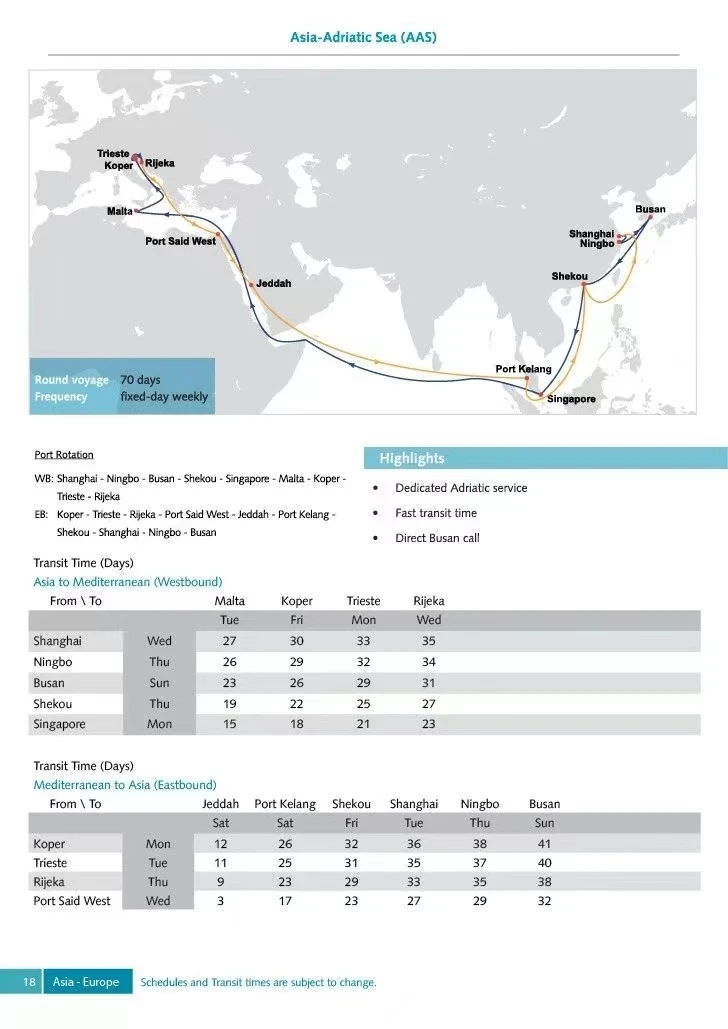
This is Ocean Alliance's Asia-Adriatic Sea [AAS] service to the Mediterranean in 2023, with ports of call: Shanghai-Ningbo-Busan-Shekou-Singapore. Alexandria, Koper, Trieste, Rijeka, Port Said, Jeddah, Port Klang, Shekou, and Shanghai. Shanghai.
The vessel called at Shanghai Yangshan port on Nov. 8–9, Ningbo port on Nov. 10–11, and Shekou port on Nov. 17th.
Of the cargo ships attacked, only the container ship had its AIS records turned on and recorded, while the bulk carrier UNITY EXPLORER's AIS had been off since November 28th." The bulk carrier AOM Sophia II has kept its AIS position and records in the Caribbean Sea since November 26, hiding its true track in another way.
The Bahamas-flagged bulk carrier Unity Explorer is owned by Unity Explorer Ltd. and managed by London-based Dao Shipping Ltd., according to the data. The vessel was scheduled to arrive in Singapore on December 15th.
The container ship "NUMBER 9" is owned by Number 9 Shipping Ltd. and managed by Bernhard Schulte Shipmanagement (BSM) of Newcastle-upon-Tyne, U.K. In a statement to Reuters, BSM said: The container ship "NUMBER 9" is currently underway, and there were no reports of injuries or pollution following the incident. The ship was hit by a rocket while passing through the Bab-el-Mandeb strait, the company said.
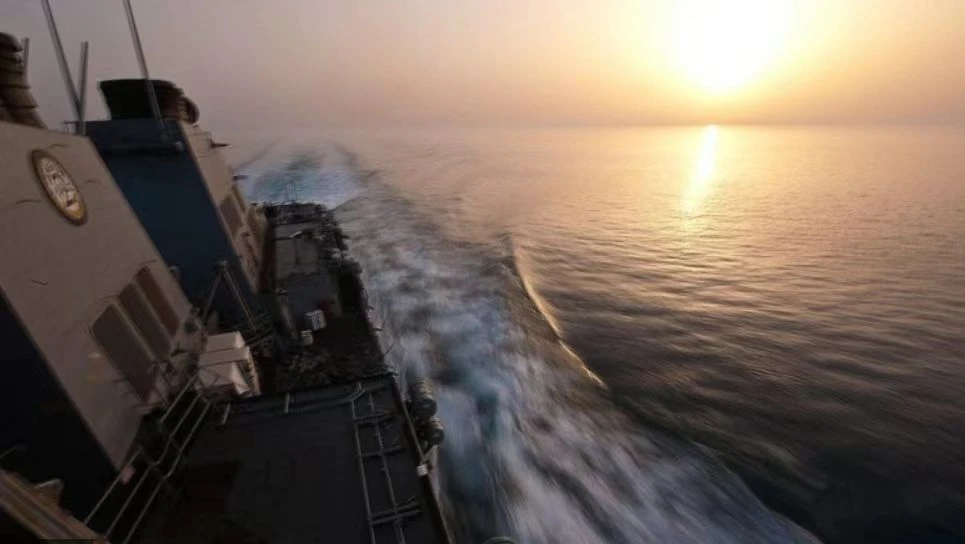
The Associated Press said a U.S. Defense Department official said that on the 3rd, the U.S. Navy destroyer USS Kani shot down at least three Houthi drones flying in the direction of the ship in the southern Red Sea and responded to a distress call from a civilian merchant ship that had been attacked by rockets.
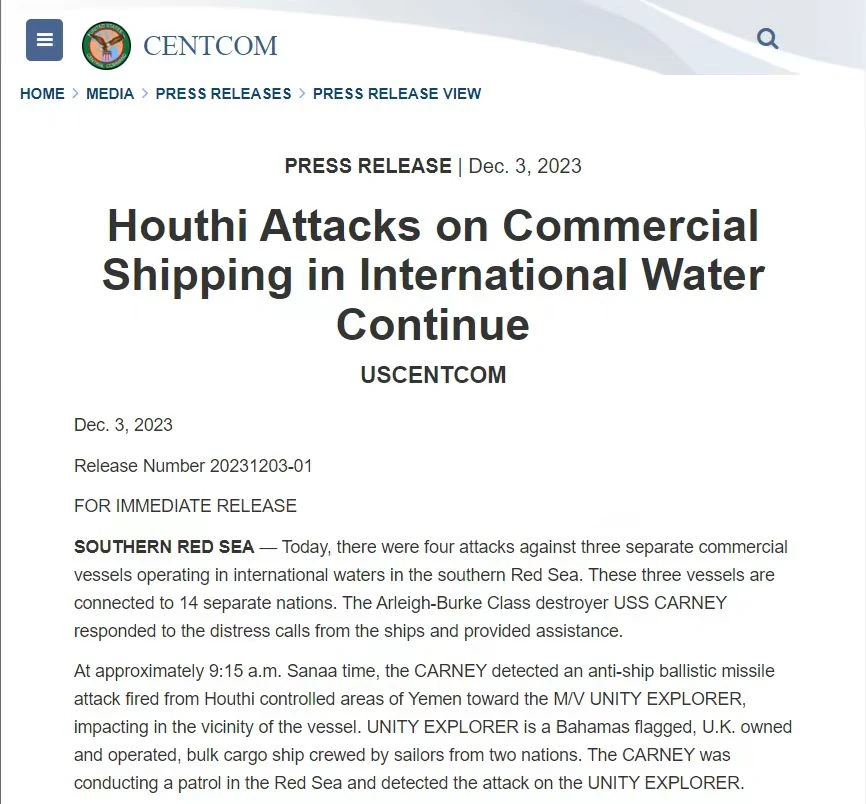
The U.S. Central Command said in a statement on the evening of March 3 that the drones were part of a series of four Houthi attacks on three merchant ships, including the bulk carrier AOM Sophia II, in addition to the two merchant ships announced by the Houthi. The United States Central Command (CENTCOM) stated that the attacks were "a direct threat to international commerce and maritime security." According to the United States Central Command, the Unity Explorer sustained minor damage, and the Number 9 was also reported damaged.
Houthi spokesman Yahya al-Sari said that they attacked two "Israeli" ships with armed drones and missiles. The spokesman said that the two vessels, the bulk carrier UNITY EXPLORER and the container ship NUMBER 9, were targeted after rejecting warnings from the Houthi maritime forces. The spokesman said that the bulk carrier UNITY EXPLORER was owned by a British company and that Dan David Ungar,
who lives in Israel, was one of its executives. The container ship Number 9 is linked to the German company Bexis Ship Management.
Daniel Hagari, a spokesman for the Israeli military, said that the bulk carrier UNITY EXPLORER and the container ship NUMBER 9 had no connection with Israel. Hagari said: "One ship was severely damaged and in danger of sinking, and the other was slightly damaged." The bulk carrier, AOM Sophia II, was not damaged.
As a result of Israel's large-scale military operation against the Gaza Strip, the Yemeni Houthis have carried out numerous attacks against Israel through drones and missiles and have threatened to launch attacks against Israeli ships in the Red Sea and anywhere else through a variety of means. They claim that any vessel flying the Israeli flag and operated or owned by Israeli companies will be targeted.
The recent attacks demonstrate the widening impact of the Palestinian-Israeli conflict and the escalation of the threats faced by vessels while navigating in the waters of the Red Sea. In particular, the expiration of the temporary ceasefire agreement between Israel and Hamas and the expansion of Israeli military operations in the Gaza Strip have increased the risk of attacks on ships at sea, especially container ships transiting the Red Sea area.