


EU Ends Antitrust Exemption! Whither The Three Shipping Unions
Oct 13, 2023
Leave a message
The Consortia Block Exemption Regulation (CBER) will expire on April 25, 2024, as it will no longer promote competition in the shipping industry, the European Union said on Tuesday. That is, the European Commission decided not to extend the EU legal framework that exempts liner shipping alliances from EU antitrust rules.
Specifically, liner shipping companies operating on major routes have been benefiting from a special rule, and the EU notes that today's decision follows a review process launched in August 2022 to gather evidence of CBER's operation since 2020, given that CBER is set to expire on April 25, 2024. CBER allows shipping companies to enter into cooperation agreements under certain conditions. The provision of joint cargo transportation services, also known as "alliances".

In its report, the EU concludes, "Overall, it appears that restoring trust between stakeholders to build a resilient, integrated, and efficient supply chain will require ensuring that the liner shipping industry is not perceived as being subject to more lenient scrutiny by antitrust enforcers than other sectors."
In its media release, the European Commission's Directorate General for Competition emphasized that "liner shipping services require significant investment. Alliances can lead to economies of scale and better utilization of vessel space. Equitable gains from these efficiencies can be passed on to users of shipping services through better coverage of ports and the provision of better services."
The European Commission's Directorate General for Competition further clarified, "The expiry of the CBER does not mean that cooperation between shipping companies is illegal under EU antitrust rules. On the contrary, carriers to and from the EU will assess the compliance of their cooperation agreements with EU antitrust regulations in accordance with the extensive guidance provided in the Horizontal Block
Exemption Regulation and the Specialized Block Exemption Regulation."
There is no doubt that the latest news on the policy will have "some impact" on the three major alliances in the consolidation market.
Analysts at DNB Bank believe that the EU's move to remove the sector's exemption marks a first step towards ensuring competition in the container sector and limited support from competition regulators in the future, as well as signaling a political harbinger of a tougher stance by the legislature towards shipping companies, which have also benefited from tax breaks.
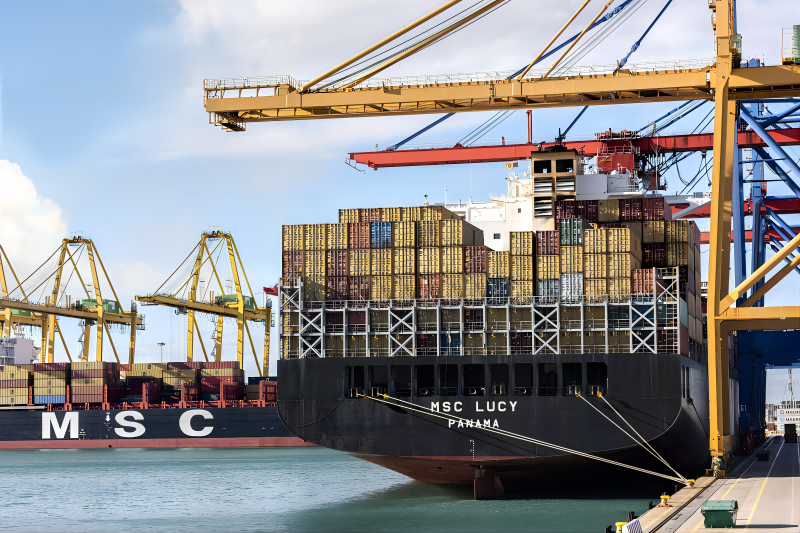
The World Shipping Council (WSC), which represents the world's leading container shipping companies, said it was "carefully scrutinizing" the basis for the Commission's position and looked forward to further dialogue to ensure "regulatory clarity".
We appreciate the recognition by the European Commission's Directorate General for Competition of the many benefits that ship sharing brings to European industry and consumers, even if we do not agree with the logic behind the decision to terminate CBER," said John Butler, chairman and CEO of the World Shipping Council. The shift to general EU antitrust rules will create a period of uncertainty as carriers adapt to the new legal framework. Nonetheless, the ship-sharing agreement will remain a perfectly legal agreement and form of cooperation."
However, the EU has now concluded that "in general, CBER no longer appears to be fit for its purpose as it does not meet the criteria of effectiveness, efficiency, and EU added value."
Maersk noted that shipping companies will be able to continue to work together under the new regime. Even after the EU announcement, it will still be possible for shipping companies to join such alliances as long as there is a separate assessment of the live alliances of liner shipping companies, which is already the case for many industry alliances today.
Indeed, for many years, the major liner companies operating in alliances have been allowed to share ships and slots.
This practice has been criticized by some European politicians and customers as distorting competition, but scrutiny increased during the epidemic as liner companies became the focus of attention due to the high price of shipping.
Some politicians in Europe and the United States accused the main pair of liner carriers of profiting from supply chain bottlenecks triggered by work stoppages in manufacturing countries and labor shortages in ports.

Many customers are also dissatisfied with having to pay high freight rates, even though they have to put up with poorer service and serious delays.
Shipping giants such as Maersk, MSC, and Duffy have also been criticized for moving into land-based logistics, competing with freight forwarders who do not benefit from the same tax breaks and exemptions from competition rules.
James Hookham, director of the Global Shippers' Forum, said, "This is good news and helps to standardize the rules of competition in container shipping."
However, there are some sober market views. Shipping analyst Lars Jensen of consultancy Vespucci Maritime believes that containerized freight prices have fallen significantly. "This is really a period where we have seen the biggest price increases ever, but also the biggest price falls. It would be a mistake to change the rules just based on the epidemic. It's questionable if you base far-reaching changes on the most extreme period in our container shipping history."

The bad times may have just begun for the consolidation market.
Maersk's 2M alliance with MSC is due to break up in January 2025, and there is no update on the renewal of the Ocean Alliance and THE Alliance, which expire in 2027, yet. While the alliances appear to be able to continue operating under the new rules, the uncertainty comes at a critical time for the consolidation market. After the super highs of recent years, when demand plummeted due to inflation, rising interest rates, and excess retailer inventories, and at the same time several liner companies spent billions of dollars ordering new vessels, which are pouring out of shipyards as the economic slowdown begins, the market's supply and demand have shifted. Predictably, the outlook for the liner companies and the three major alliances is more pessimistic.
Mikkel Emil Jensen, senior analyst at Sydney Bank, said the EU's hard line and many new ships will put huge pressure on freight rates.

According to the bank's data, liner companies' newly-built vessels account for 28% of their existing fleets, which will be delivered up to and including 2025.
From an action point of view, some forward-looking shipping companies have long started to strengthen their regional market influence and service radiation and increase their share of emerging markets to fight against the downward, recessionary market economy.
Another shipping world network, although the expiration of the CBER policy, but also a dose of "sobering agent" in the market of containerized transport, the old shipping companies, what the wind and waves have not seen? In other words, if the CBER policy is only a geopolitical strategy of the "prologue" along with the recession in Europe, the liner company's future overall layout will also appear "escape from Europe" or "away from Europe. The future overall layout of liner companies will also appear to have an "escape from Europe" or "away from Europe" strategy.
Although the world is still a "war-torn" place, past experience tells us that the more volatile the market, the more active the demand will be.