


Goldman Sachs Warns: The Recession in The Shipping Industry May Be Longer And Deeper!
Oct 18, 2023
Leave a message
As for the future of the shipping industry, Goldman Sachs warned that the recession would be deeper and longer than the market had expected.
Goldman Sachs analyst Patrick Creuset predicted in the latest report that the recession in the shipping industry will be deeper and longer than the market thought, which will lead to a continued decline in freight prices and corporate profits in the shipping industry. Maersk's future is not optimistic, downgrading Maersk to "sell":
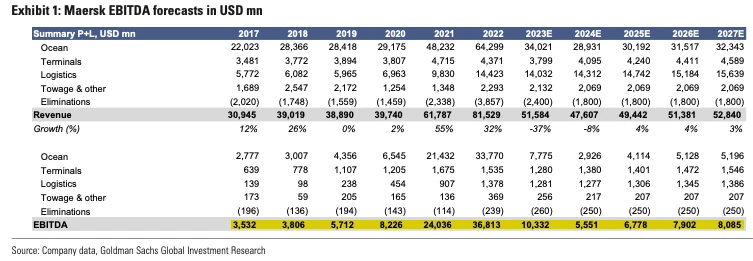
"We believe that the market is still not aware of the severity and duration of the recession that shipping is about to face. At present, there is still excess freight capacity in the market, which will put pressure on the price of goods and the company's profits.
Maersk's profits are expected to fall 8 percent between 2023 and 2024."
Creuset said that although the shipping market is experiencing falling prices, supply is still relatively abundant due to the continuous release of new vessels, the timely delivery of goods, and the small number of decommissioned and scrapped vessels.
The delivery speed of new ships accounts for about 1% of the global fleet, with little delay, low idle, and scrappage, and the capacity of active ships will increase significantly on major routes in November.
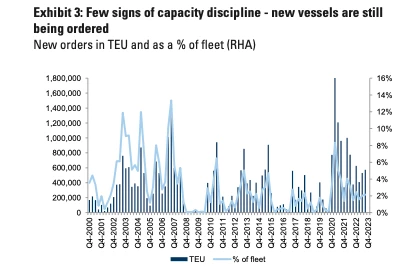
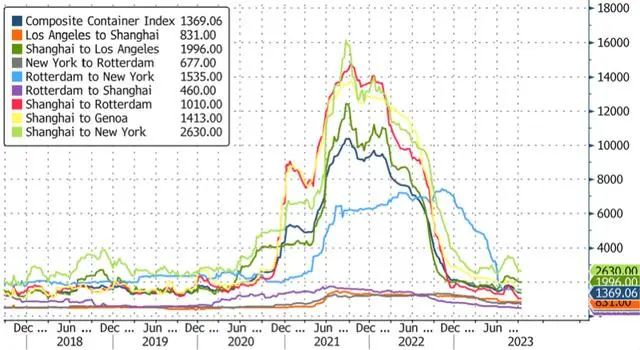
It is worth mentioning that the container shipping industry depends on the global demand trend. During the period of 2020-22, COVID-19, as retailers and other companies replenished their inventory to meet the pent-up demand of consumers, the container shipping industry ushered in an unprecedented boom. there is a situation in which one case is difficult to obtain and the freight rate continues to rise.
However, since reaching its peak in early 2022, weak demand has led to a sharp fall in container rates.
Creuset believes that compared with previous shipping bear markets, there are two main factors that could lead to a more serious decline in Maersk's profit margins:
One is that the industry's balance sheet used to be highly leveraged, which means that cash flow does not last long, and this time, most carriers hold billions of dollars in cash.
Second, the evolution of alliance structure in the shipping industry, these changes may cause some shipping companies to become more independent, but it may also increase the difficulty of managing excess freight capacity. Operators are still ordering new ships, suggesting that the industry needs more tools to manage capacity.
Maersk warned in August that global trade had shrunk for longer and more than expected, that demand in Europe and the US was falling and that there were "dark clouds" ahead.
Vincent Clerc, chief executive of Maersk, said in an interview with Bloomberg that the container shipping industry is in the period of maximum adjustment after the COVID-19 boom in 2021 and 2022, and that global trade may have shrunk for longer and more than previously thought.