


Maersk And Hapag-Lloyd Announce ETS Surcharge Rates
Sep 27, 2023
Leave a message
European shipping companies and freight forwarders are beginning to understand that the European Union (EU) carbon emissions regulations, which are scheduled to take effect in January next year, will increase shipping costs. The Carbon Emission Trading System (ETS) is a measure taken by the European Union to force its transportation industry to decarbonize by introducing a carbon dioxide pricing market mechanism.
The calculation of ETS carbon emissions per standard unit is based on the methodology developed by the Clean Goods Working Group and the market price of EU quotas (EUA). The carbon emissions calculation for navigation in European waters will be multiplied by the market price of the EUA, where the market price is obtained from the ICEDEU3 index and the three-month average is used to enable carriers to calculate and implement ETS surcharges per standard container.
The program will be phased in, paying 40 percent of those GHG emissions through September 2025, but with coverage beginning on January 1, 2024. By 2026, carriers will pay 70% of the 2025 emissions, and from 2027 onwards, carriers will have to pay for 100% of the emissions generated in 2026 and beyond.
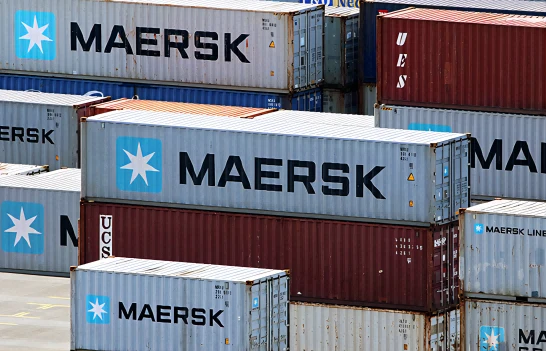
However, Maersk Line and Hapag-Lloyd each issued guidance last week, but there is a huge difference between the two major shipping lines in the level of additional costs expected. This suggests that there is still considerable uncertainty over the level of carbon emissions trading surcharges that may be added to shippers' bills.
Hapag-Lloyd estimates that a container shipped from Asia to Northern Europe will incur an ETS surcharge of €12 per TEU and €31 for reefer containers, while Maersk suggests that the same voyage will cost customers an additional €70 per TEU and €105 for reefer containers.
Hapag-Lloyd's customer advisory said its data "is intended to help customers envision the potential impact on the supply chain in 2024," but added: "These data should be used as a guide, as ETS surcharges, including their calculation methodology and estimated prices, are estimates and are subject to change."
Maersk also said it expects fluctuations in EUA levels due to fluctuations in supply and demand, but added: "The cost of compliance is expected to be high and to increase as it is phased in. It will come in the form of a stand-alone surcharge known as the Emissions Surcharge, which applies to bookings on all voyages subject to the EU Carbon Emissions Trading System."
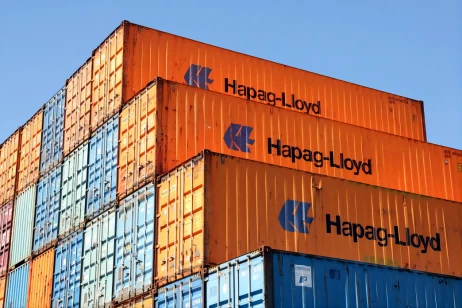
However, both carriers also revealed that shippers using their green fuel programs—Maersk's ECO Delivery and Hapag-Lloyd's Ship Green—to blend fossil fuels with biofuels to reduce greenhouse gas emissions will not be subject to the ETS surcharge.
This month, Amazon signed an "ECO Delivery" agreement with Maersk to ship 20,000 40-foot containers this year and next using green biofuels.