


New Study Evaluates Traffic Flow And Carbon Emissions At Six Major Seaports
Dec 12, 2024
Leave a message
The report highlights the impact of congestion on port emissions in particular.
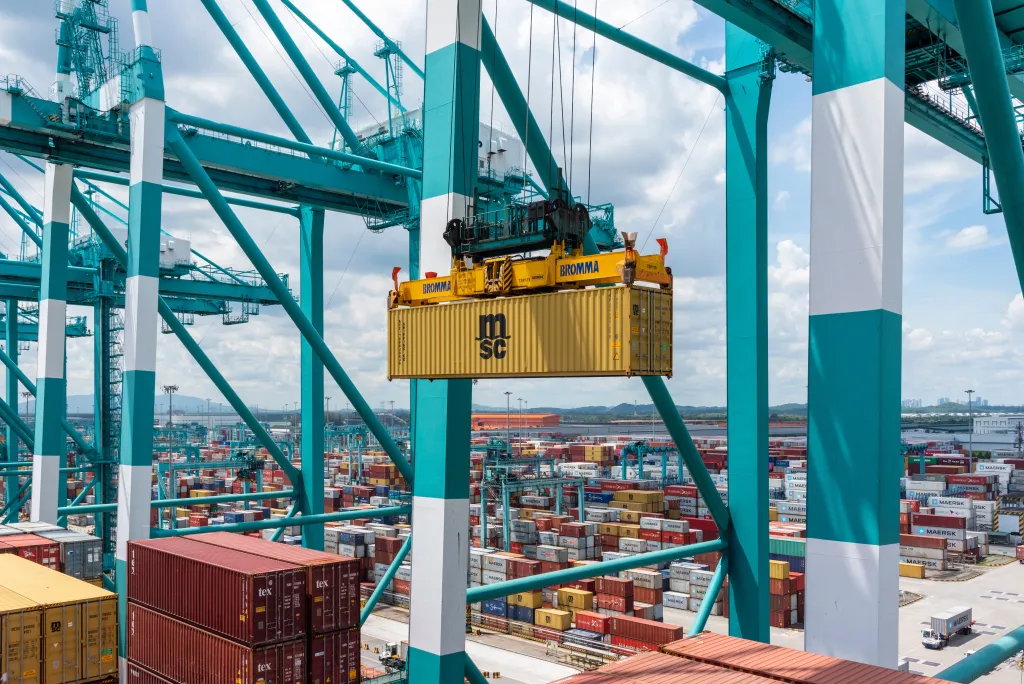
Emissions visibility company VesselBot has released a comprehensive report detailing its inaugural analysis of CO2 port emissions, leveraging a multitude of factors including engine load factor, engine power, vessel speed, utilization rates, and real-time location data. This analysis is particularly valuable for freight forwarders seeking to optimize their logistics and reduce their carbon footprint.
By utilizing so-called 'primary data' related to these factors, VesselBot is able to assemble intricate analyses of specific vessels, routes, and timeframes. Insights gleaned from these data points can subsequently inform strategic decisions aimed at effectively minimizing emissions, a critical concern for freight forwarders committed to sustainability.
In calculating the total CO2 emissions at the ports covered in its report, VesselBot considered emissions from both main engines and auxiliary engines. Factors taken into account for these calculations include engine power, operational duration, CO2 emissions per unit of power (emission factor), engine load factor, and the ship's current speed relative to its maximum speed, calculated using a precise formula.
Key Findings from Major Ports
Port of Rotterdam
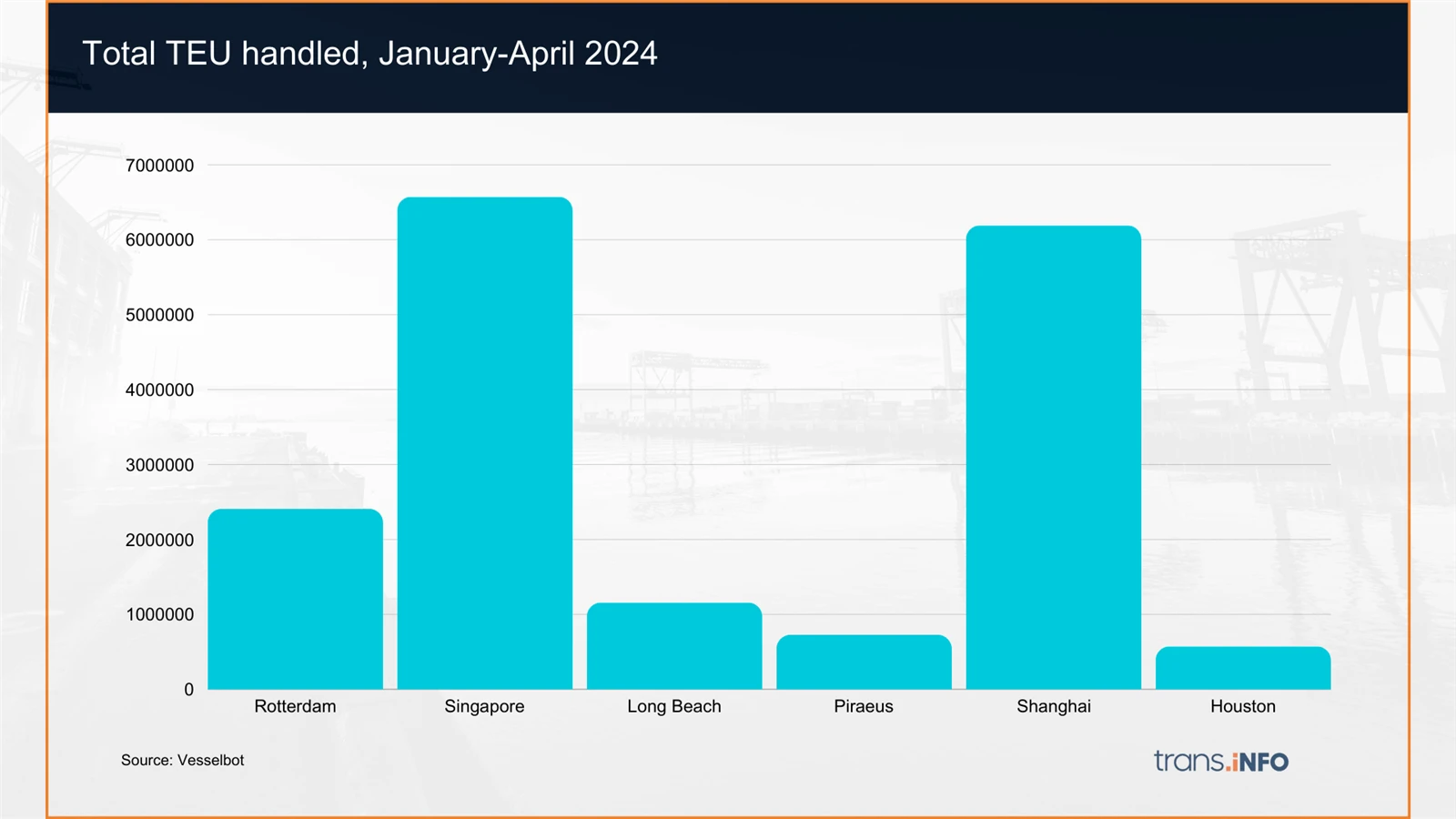
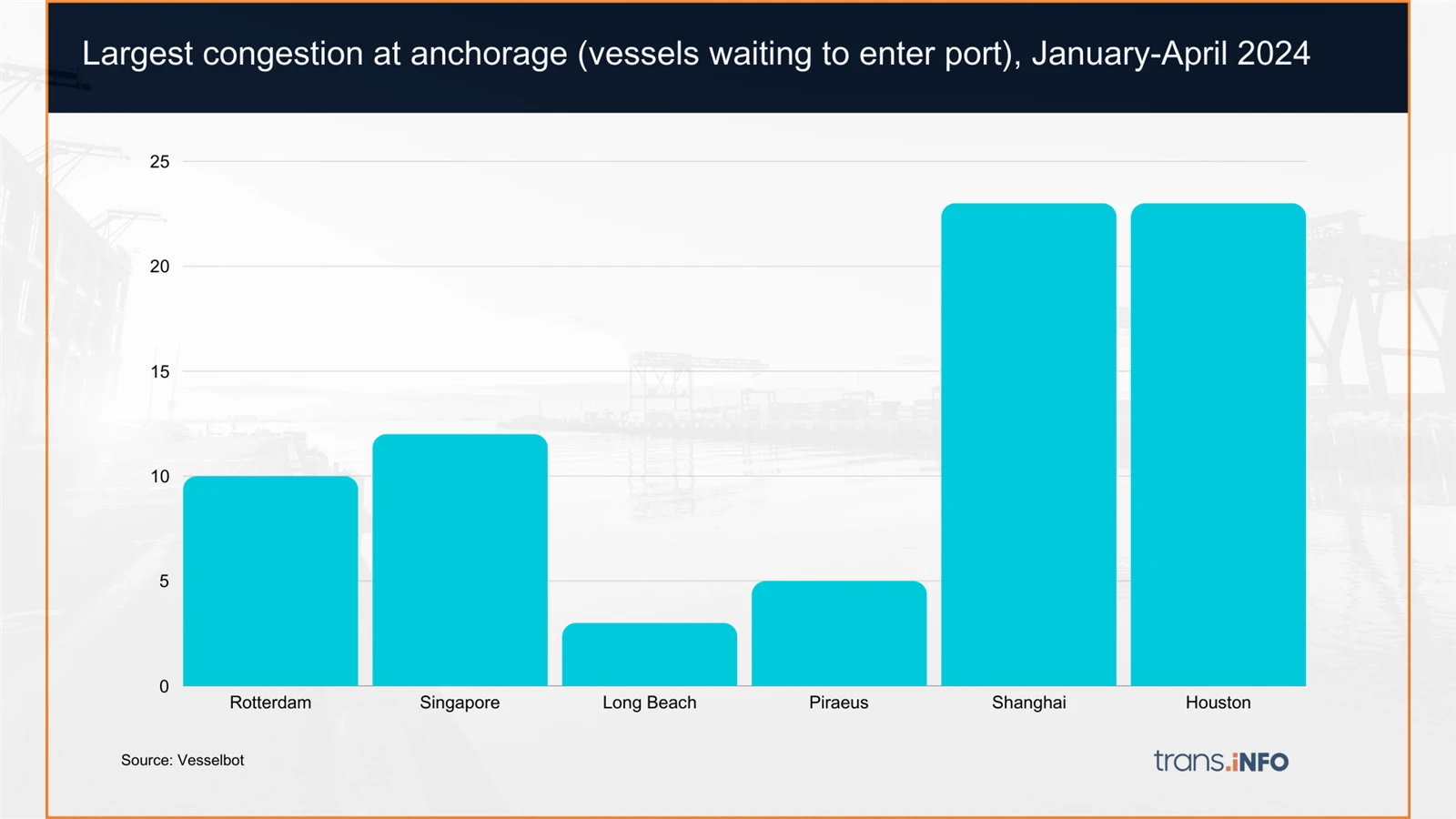
The report first analyzes the Port of Rotterdam, revealing notable congestion patterns that impact freight forwarders' operations. On March 27, 2024, the highest congestion at anchorage was recorded with 10 vessels waiting to enter, while peak berthing congestion occurred on February 16-17, 2024, with 17 vessels docked. The CO2 emissions heat map highlights emission hotspots, indicating areas where vessels spent significant time idling or maneuvering, potentially delaying freight forwarders' schedules.
Port of Singapore
Recently making headlines due to high congestion, Singapore's port exhibited peak congestion levels with 12 vessels at anchorage on March 13, 2024, and 31 vessels at berth on March 3, 2024. Despite this, the port's operations were highly efficient, with a CO2 intensity of only 4.74 kg per TEU, positioning it as one of the most efficient ports in the study and a model for freight forwarders to emulate.
Port of Long Beach
On the West Coast of the US, Long Beach experienced peak congestion between March 1-3, 2024, with three vessels at anchorage and 13 vessels docked on January 24, 2024. The port's moderate CO2 emissions compared to other major ports suggest efficient handling of traffic and emissions management, beneficial for freight forwarders navigating through the port.
Port of Piraeus
The Greek Port of Piraeus was another port examined in the report, demonstrating significant efficiency despite lower overall traffic volumes. With a peak of five vessels at anchorage on January 11, 2024, and nine vessels at berth on January 8 and February 18, 2024, its CO2 intensity was the second lowest after Singapore, making it an attractive option for eco-conscious freight forwarders.
Port of Shanghai
Shanghai, one of the busiest ports globally, faced the highest congestion in VesselBot's research, with 23 vessels at anchorage on February 1 and April 1, 2024, and 28 vessels docked on January 16, 2024. Despite handling the largest volume of TEUs, the port's CO2 intensity was the highest at 11.35 kg per TEU, indicating potential areas for efficiency improvements that freight forwarders should consider.
Port of Houston
Houston's port exhibited similar congestion patterns to other major ports, with peak congestion on February 1 and April 1, 2024, recording 23 vessels at anchorage and 28 vessels docked on January 16, 2024. The port's CO2 emissions were relatively moderate, providing freight forwarders with a balanced option for their logistics needs.
The Impact of Congestion
The report concludes that ports with higher congestion, such as Singapore and Shanghai, tend to have higher emissions due to increased idling and maneuvering times, impacting the efficiency of freight forwarders' operations. Furthermore, VesselBot emphasizes that larger vessels, while more efficient in terms of emissions per TEU, can significantly contribute to overall port emissions due to their greater power requirements. Lastly, the analysis underscores the importance of considering both total emissions and emissions per unit of cargo to accurately assess port environmental performance, a crucial factor for freight forwarders aiming to minimize their carbon footprint.