


Suez Canal Gates Paralyzed ! More Than 100 Container Ships Are Stranded Or Detoured, With A Value Of More Than 80 Billion Dollars, And Retail Giants Are Delayed.
Dec 22, 2023
Leave a message
Since mid-November, the Houthis have begun to carry out attacks on "Israeli-related vessels" in the Red Sea. At least 13 container liner companies have announced the suspension of sailing in the Red Sea and nearby waters or detour to the Cape of Good Hope (see article: Red Sea tensions, freight rates may continue to rise until January!). At least 13 shipowners detoured to the Cape of Good Hope. It is estimated that the value of cargo carried by vessels redirected away from the Red Sea route has totaled more than $80 billion.
According to the tracking statistics of a shipping big data platform in the industry, as of the 19th, the number of container ships passing through the Bab-el-Mandeb Strait (the gateway to the Suez Canal, one of the world's most important shipping lanes), which is located at the junction of the Red Sea and the Gulf of Aden, has dropped to zero, indicating that the key passageway into the Suez Canal has been paralyzed.
According to data provided by logistics company DXN, 121 container ships have already given up on entering the Red Sea and the Suez Canal, opting instead for a detour around the Cape of Good Hope in Africa, resulting in an increase of about 6,000 nautical miles in the voyage, which could extend sailing time by one to two weeks. The company expects more ships to join the bypass route in the future. According to the U.S. Consumer News and Business Channel's latest report, the value of the goods carried by these ships diverted from the Red Sea route totaled more than 80 billion U.S. dollars.
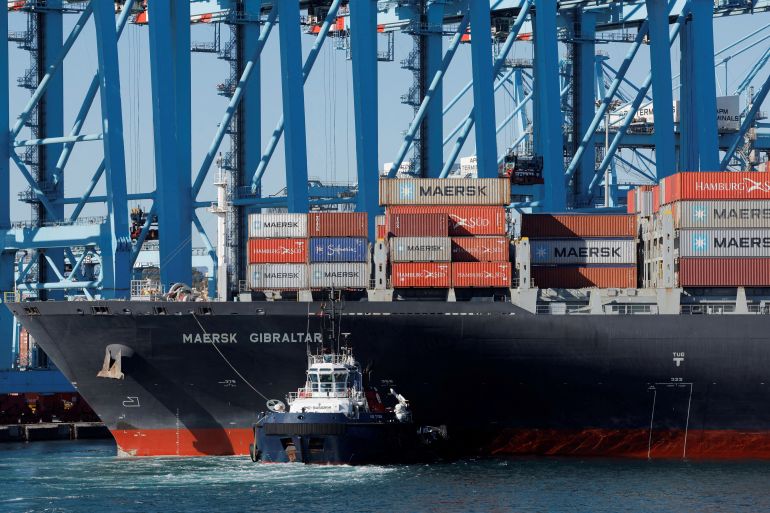
In addition, the cost of insurance for ships still choosing to sail in the Red Sea jumped this week from about 0.1% to 0.2% of the hull value to 0.5%, or $500,000 per voyage for a $100 million vessel, according to several foreign media reports. Shipping and logistics companies face the dilemma of changing routes, which means higher fuel costs and delays in arriving at ports, while continuing to navigate the Red Sea entails greater safety risks and insurance costs.
United Nations officials have said that if the Red Sea waterway crisis continues, it could lead to higher commodity prices, a bitter consequence that would be paid for by consumers.
Due to the escalation of the situation in the Red Sea, some enterprises have begun to use a combination of air and sea transportation in order to deliver goods safely and on schedule. The chief operating officer of a German logistics company in charge of air transport business said that some companies choose to transport goods by sea to Dubai, United Arab Emirates, and then from there to the destination of the goods by air. More customers have entrusted the company with the air and sea mixed transportation mode of transportation of clothing, electronic products, and other goods.
Global home furnishing giant Ikea recently warned of possible delivery delays for some of its products due to Houthi attacks on ships traveling to the Suez Canal. An IKEA spokesperson said that the situation in the Suez Canal will lead to delays and could result in limited availability of certain IKEA products. In response to the situation, IKEA is in dialogue with transportation providers to ensure that goods can be transported safely.

At the same time, IKEA is evaluating other supply route options to ensure that its products are delivered to customers. That's because many of the company's products typically pass through the Red Sea and the Suez Canal to get from factories in Asia to Europe and other markets.
Project 44, a service provider of global supply chain information visualization platforms, noted that avoiding the Suez Canal would extend shipping times by 7–10 days, potentially leading to inventory shortages in stores in February.
In addition to product delays, the longer voyage will also increase transportation costs, which could have an impact on prices. Xeneta, a shipping analysis firm, estimates that the change in routing could cost an additional $1 million per voyage between Asia and Northern Europe, a cost that will ultimately be passed on to consumers who buy the goods.
A number of other brand owners are also closely monitoring the possible impact of the Red Sea situation on their supply chains. Swedish home appliance maker Electrolux has set up a task force with its carriers to look at a range of measures, including finding alternative routes or prioritizing deliveries. However, the company expects that the impact on deliveries may be limited.
Dairy company Danone said they are working with suppliers and partners to closely monitor the situation in the Red Sea. U.S. apparel retailer Abercrombie & Fitch Co., on the other hand, plans to shift to air freight to avoid problems. The company said the Red Sea route to the Suez Canal is important to its business because all of the company's goods from India, Sri Lanka, and Bangladesh take this route to the United States.