


Traffic Restrictions And Increased Congestion! 22 Container Ships Lined Up,190000TEUs Affected
Nov 29, 2023
Leave a message
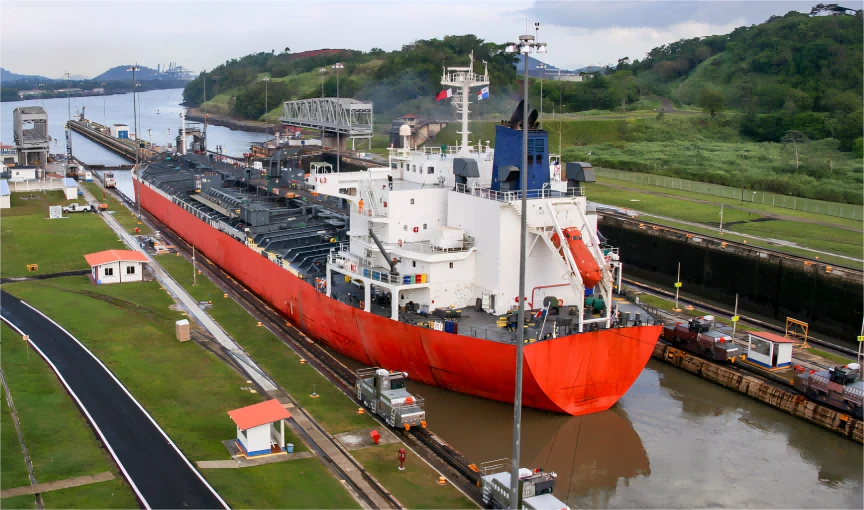
According to the Linerlytica report, this type of ship is currently stranded on the Panama Canal as transit berths for container ships will be reduced from January 1, 2024.
Swire ships launched a trans-Pacific route to avoid congestion on the Panama Canal.
Linerlytica noted that congestion on the Panama Canal began to increase, with 22 container ships waiting by the end of last week, 14 of which were new Panamanian ships. Several shipping companies have announced a Panama Canal transit surcharge, including MSC and CMA, and MSC will impose a Panama Canal surcharge of $297 / TEU from December 15. CMA announced a surcharge of US $150 / TEU from January 1, 2024.
So far, container ships have not been affected by transit restrictions in response to a drop in water levels caused by drought. This is because priority is given to vessels serving liner services.
However, the Panama Canal Authority is taking stringent measures to reduce the daily transit frequency of new Panamanian carriers on the canal from eight to five from January 2024, with a limit of 35 per week.
At present, container ships transit 29 Neo-Panamanian ships per week (before the suspension adjustment), of which 18 are northbound (to the United States) and 11 are southbound (from the United States). These crossings accounted for 83 per cent of the transit quota in January, of which only 17 per cent were reserved for non-container ships.
In February next year, the number of transit flights will be further reduced to 18 per day, of which the transit frequency of new Panamanian vessels will be limited to five per day.
As of November 26, there were 22 190000 TEUs container ships waiting at the Panama Canal Anchorage, the highest number ever recorded, of which 14 were new Panamanian container ships.
"the situation will worsen in the next two months as the new transit quota takes effect, and continued protests have affected land traffic at some Panamanian ports," Linerlytica said.
Swire launches trans-Pacific routes to avoid Panama Canal congestion
Swire Projects, the heavy transport subsidiary of Swire Shipping, has launched a special trans-Pacific semi-liner service to avoid congestion caused by traffic restrictions on the Panama Canal. Previously, shippers faced long delays and surcharges in the region.
Now, shippers are looking for alternative routes to save time and reduce costs. Swire said its dedicated semi-liner service "connects Qingdao, Taicang and en route ports to Port Everett in Washington and Vancouver Port in British Columbia". It will also provide docking services at ports in Southeast Asia, the West Coast of the United States and the Gulf of Mexico.
The company explained that docking on the west coast would provide a gateway to the interior of the United States, avoiding the need to transport goods through the Panama Canal. The service is provided on an ad hoc basis, but Swire Projects says there is a "growing demand on the west coast for reliable transportation of bulk and project goods". The service ships can accommodate a variety of goods, including project cargo, groceries, IMDG, steel, forest products and dry bulk cargo.
Rufus Frere-Smith, Regional Director for the Americas of Swire Project, said: "We believe that there is operational space for quality-oriented project carriers who can provide regular navigation to the market. Due to the lack of other conventional options, project goods entering the West Coast are often transported by traditional bulk carrier operators. "
It is predicted that more shippers will seek other routes rather than facing delays at the Panama Canal. The Suez canal's share of shipments from the us gulf to Asia rose to 83 per cent in October, up from 23 per cent a year ago, according to standard & poor's Global analysis.
The Panama Canal adds extra space to the highest bidder
The Panama Canal Authority said it would add additional shipping spaces to allow ships to pay high fees to pass through the waterway, which has become congested by the continuing drought.
Through special auctions, long-awaited ships can pay a lump sum-- sometimes millions of dollars recently-- to pass through the Panama Canal. According to an announcement, only ships waiting for 10 days or more are eligible to participate in the auction.
In recent months, it has become increasingly profitable to auction through canals, with shipping companies paying about $235 million so far this year. Extremely low rainfall has limited the water level of the lakes that supply the canal, forcing the agency in charge of the canal to limit the number of ships to sail every day next year.
This leaves ships with only a few options: either wait for a long time to sail, or bypass the circuitous route of thousands of miles in South America, or pay for faster passage time.
"ships without reservations may be delayed indefinitely." The announcement said the new auction was aimed at "ships that have been waiting for a long time in the navigation queue".