


Freight Rates Continue To Fall After A Long Vacation! Maersk Mercantile Drops To $1,450 And Threatens To Deepen Its Decline.
Oct 11, 2023
Leave a message
During the 11th holiday, container shipping market tariffs continued to fall and did not improve after the holiday. Freight forwarders pointed out that the market entered the off-season after the holiday. Last week, the U.S. Southwest route (Los Angeles, Long Beach) per big box (40-foot container) tariffs in the range of $1,550–1,600 this week are estimated to fall again. Maersk on Friday, the official website of the U.S. Southwest Coast Route tariffs fell to 1,450 U.S. dollars per big box, fear of deepening tariffs. The decline is expected to deepen.
The latest published DELHI World Containerized Freight Index (WCI) is down 1.1% compared with the same period last year, which fell 62.3%.
Freight forwarding ship practitioners pointed out that the U.S. Southwest route capacity cuts more, so last week there can be more than 1,550 freight rates; the U.S. Northwest rates are only about 1,300 U.S. dollars; the U.S. East Panama Canal drought affects the passage of the ship; the freight rate is maintained at about 2,300 U.S. dollars. This week, the rate will be reduced to 1500 U.S. dollars, below the cost of some shipping companies.
European routes are the hardest hit. Evergreen Marine Transportation General Manager Xie Huiquan recently admitted that the European line is now a big box (40-foot container) with 800 U.S. dollars in tariffs, and even though the cost of change is not enough, many shipping companies prefer not to run. Industry veterans said that for the European line, if there are 24,000 TEU ultra-large container ships, the cost of each big box is about 1,000 U.S. dollars, but if there are about 8,500 boxes of container ships, the cost will be pulled up to about 1,500 U.S. dollars.
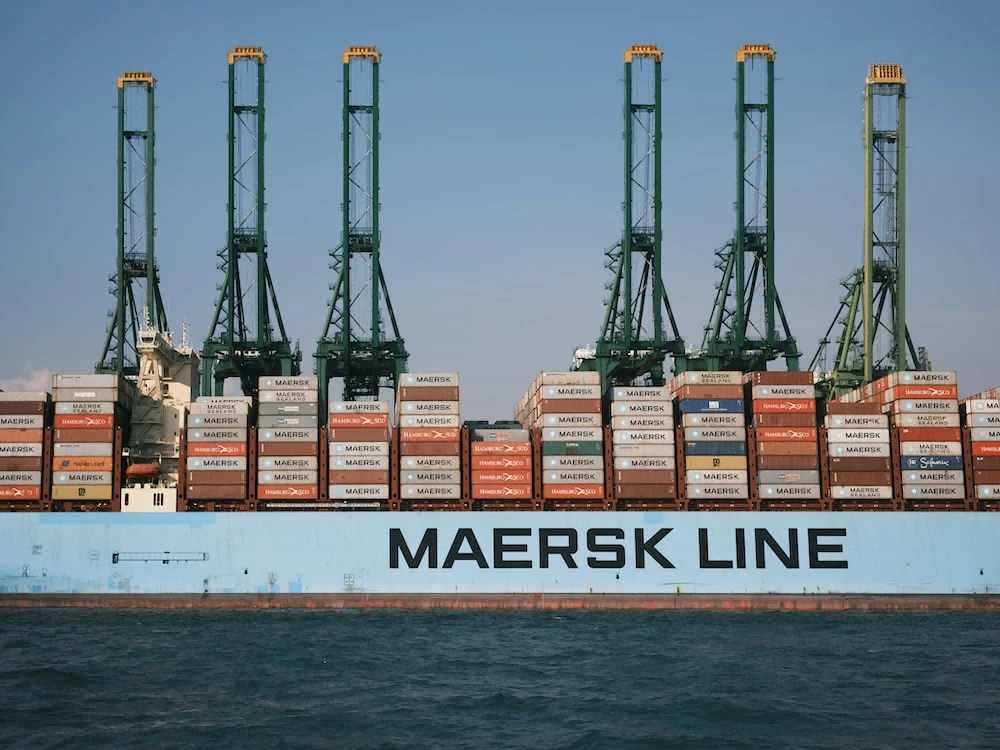
According to Alphaliner, which released a ranking of the top 30 container ports for the first half of 2023, container throughput at major ports in Europe and the United States declined across the board, with declines ranging from 5% to 25%. In contrast, Chinese ports performed better, growing 4.8% over the same period last year.
However, major transshipment ports in Southeast Asia, such as Singapore and Port Klang, Malaysia, have seen limited growth. Although U.S. imports from Asia declined by 21% in the first eight months of this year, shipping companies have managed to maintain some degree of stability in trans-Pacific eastbound rates since the beginning of July as a result of sustained capacity reductions.
According to Sea-Intelligence data, shipping lines plan to reduce excess vessel capacity on the eastbound trans-Pacific by 14% in October, almost twice as much as in September, and in contrast to the eastbound trans-Pacific, the outlook for the westbound Europe is not optimistic, and shipping lines are expected to aggressively expand cuts of 25–30% in October to prevent rates from declining too quickly, and in light of the large-scale pumping strategy, the shipping In view of the large-scale pumping strategy, the market will increase the unpredictability of freight rate increases and decreases, as well as face other challenges such as schedule changes, customs clearance, and ship transfer.
Industry veterans analyze the European line to the new ultra-large container ships mostly and now continue to turn over the ship. These ships operating costs are high, the ship cuts space, and fixed costs or to spend generally account for about 20% of operating costs.