


Shipping Rates Soar 600%, Hitting $10,000
Jan 15, 2024
Leave a message
As the situation in the Red Sea heats up, with more and more container ships avoiding the Red Sea-Suez Canal route and detouring to the Cape of Good Hope, shippers are scrambling to place their orders in advance in order to mitigate the impact of longer transit times from Asia to Europe.
However, due to the delay in the return voyage, the supply of empty equipment in the Asian region is extremely tight, and the shipping company's ability to release the box is also limited to a large number of "VIP contracts" or being willing to pay high freight rates for shippers.

Even so, there is still no guarantee that all the containers delivered to the terminal can be loaded before the Chinese New Year on February 10, because mainly the carrier will give preference to the higher price of the spot cargo and the lower price of the contract for the postponement of the processing.
Local time on the 12th, the U.S. consumer news and business channels reported that the longer the current tensions in the Red Sea last, the greater the impact on global shipping, and shipping costs will be increasingly high. The situation in the Red Sea is heating up and is having a chain reaction, pushing up global shipping prices.
Reportedly, according to statistics, due to the Red Sea situation, part of the Asia-Europe route on the container tariff recently soared nearly 600%. At the same time, in order to make up for the impact of the suspension of the Red Sea route, a number of shipping companies are moving their ships on other routes to Asia-Europe and Asia-Mediterranean routes, which in turn pushes up the cost of shipping on other routes.
According to a report on Loadstar's website, the price of space on the China-North Europe route was staggeringly high in February, with rates exceeding $10,000 per 40-foot container.
That said, Peter Sand, Principal Analyst at Xeneta, believes that in the current environment, shippers should not rely too heavily on low freight rates until supply chain disruptions are resolved.
Peter Sand emphasizes: "Shippers have been informed that long-term contract rates will no longer be honored and will be pushed into the spot market. As a result, shippers cannot simply expect to pay lower rates, as shipping lines will be more inclined to give preference to contracts concluded at higher rates in the spot market."
Meanwhile, the Container Spot Index, which reflects average short-term rates, continues to soar.
Data from this week's DELUXE World Container Rate Composite Index WCI showed that rates on the Shanghai-to-North Europe route rose a further 23 percent to $4,406/FEU, up 164 percent since Dec. 21, while spot rates from Shanghai to the Mediterranean rose 25 percent to $5,213/FEU, a 166 percent increase.

In addition, shortages of empty container equipment and drought draft restrictions in the Panama Canal have pushed up trans-Pacific rates, with Asia-U.S. West rates rising by about one-third since the end of December last year to around $2,800 per 40 feet. Average Asia-U.S. East rates have risen 36 percent since last December to about $4,200 per 40 feet. (See Maritime article: 780,000 TEUs! A new wave of "box shortages" is on the way.
However, these spot rates will look relatively inexpensive in a few weeks if the shipping lines' rates meet expectations. Some trans-Pacific carriers will introduce new FAK rates effective January 15th. Freight rates for 40-foot containers will be $5,000 on the U.S. West Coast and $7,000 for 40-foot containers in East Coast and Gulf Coast ports.
As tensions continue to rise in the Red Sea, Maersk warned that disruptions to Red Sea shipping could last for months. (View Maritime article: Maersk Warns Red Sea Shipping Disruption Could Last Months) As the world's largest liner operator, Mediterranean Shipping Company (MSC) has announced that it will increase its tariffs for the second half of January from the 15th. The industry forecasts that trans-Pacific rates could reach new highs in early 2022.
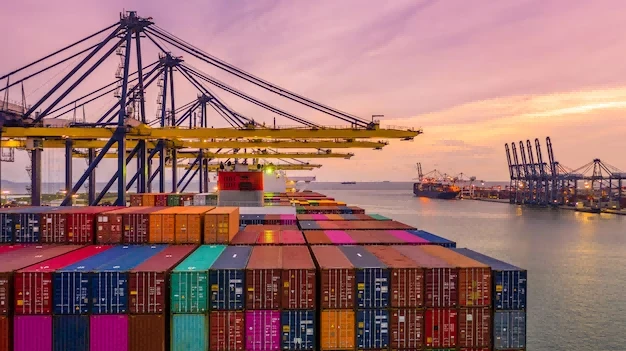
Mediterranean Shipping Company (MSC) has announced new freight rates for the second half of January. From 15 onwards, the U.S. West Route tariffs will rise to 5,000 U.S. dollars, the U.S. East Route will rise to 6,900 U.S. dollars, and the Gulf of Mexico Route will rise to 7,300 U.S. dollars. In addition, France's Duffy Line (CMA CGM) has also issued a notice that, since May 15, shipping to the West Mediterranean port of the 20-foot container tariffs will be adjusted to 3500 U.S. dollars, while the 40-foot container tariffs will rise to 6000 U.S. dollars.
DXN analysis data show that, as of December 12, due to the Red Sea situation, rerouting has been determined to reroute the number of container ships to 388, for a total expected capacity of 5.13 million TEU. Forty-one vessels have already arrived at their first destination port after rerouting. Project44, a logistics data analysis organization, also pointed out that the daily ship traffic in the Suez Canal had plummeted by 61 percent to an average of 5.8 ships compared to the period before the Houthi attack.