


Warning: All Ships Avoid The Red Sea; Detours Are A Certainty.
Jan 13, 2024
Leave a message
Yemen's capital Sanaa and other places were hit by US and British airstrikes in the early hours of the 12th local time (with support from Australia, Bahrain, Canada, and the Netherlands). U.S. President Joe Biden and British Prime Minister Sunnucks confirmed that U.S. and British forces struck Houthi forces in Yemen.
On the 12th of local time, the Houthis in Yemen issued a statement saying that the US and British forces had launched 73 attacks on Yemen, which were concentrated in the capital Sana'a, Hodeidah, Taiz, Hajjah, and Sa'ada provinces, and that the attacks resulted in the deaths of five militants and the wounding of six others.
The statement also indicated that there would be a major counter-attack and that the United States and British attacks would not cause it to abandon its position in support of the Palestinian people, and that the Houthis would continue to prevent the navigation of relevant Israeli ships or ships bound for ports in the occupied Palestinian territories in the Arabian Sea and the Red Sea.
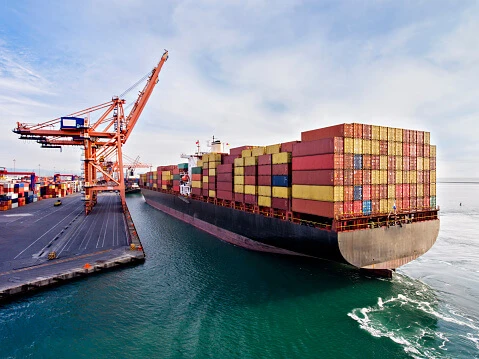
Following the launch of overnight bombings of Houthi targets in Yemen by six countries, the global shipping industry has received advice to temporarily circumvent the key Asia-Europe maritime trade route.
According to a notice issued by the International Association of Independent Tanker Owners (Intertanko), which represents the interests of oil, chemical, and gas tanker owners, the Consortium for the Red Sea (CMF), which represents 39 countries, including the United States and the United Kingdom, has strongly recommended that all ships "stay away" from the Bab-el-Mandeb area. The notice was also reported on the website of a top shipping insurance company.
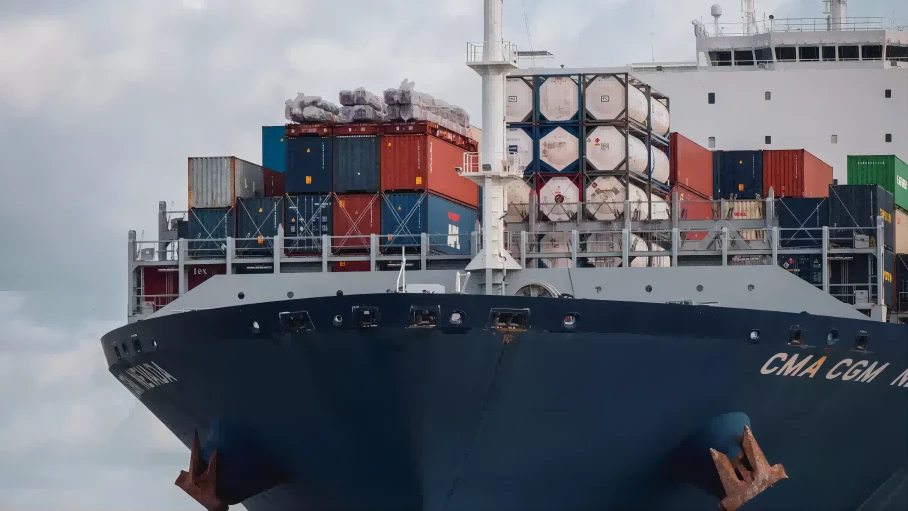
So far, the Houthis have mainly targeted container ships carrying manufactured goods, which has resulted in a large number of trade routes being diverted. Even before that happened, however, commodities trading giant Trafigura Group noted in its assessment on Thursday that shipments of oil and gas tankers had fallen by 15 to 20 percent.
The Baltic International Shipping Council (BIMCO), another large trade organization, confirmed that the military's advice was to avoid hostile areas, effectively cutting off shipping access to the southern Red Sea.
Niels Rasmussen, chief shipping analyst at BIMCO, said, "If the situation escalates, all ships will have to avoid the Red Sea until safe passage is restored and the Suez Canal is effectively closed to all ships." Except for ships that don't exactly cross the Red Sea.
Vessel tracking data on Friday showed that several tankers carrying petroleum products and chemicals bound for the Bab-el-Mandeb Strait either slowed down or turned around after the attack, but some were still passing through. A ship broker reported that most tanker owners decided to suspend passage through the region, although a few still ventured onward.
Merchant ships have long enjoyed free passage, which means that vessels are still legally allowed to pass. However, it is unclear what the insurance status of such transits is in the current situation.
If this proposal is strictly enforced, the blockade of the Bab-el-Mandeb will amount to the closure of the Suez Canal as an alternative route for any ship wanting to sail between Asia and Europe.
BIMCO analyst Rasmussen noted that a prolonged blockade of the designated area of the Red Sea could lead to an increase in demand for tankers, containers, and dry bulk transportation by 12%, 11%, and 5%, respectively. This would pose significant challenges and potential economic losses to the global shipping industry.